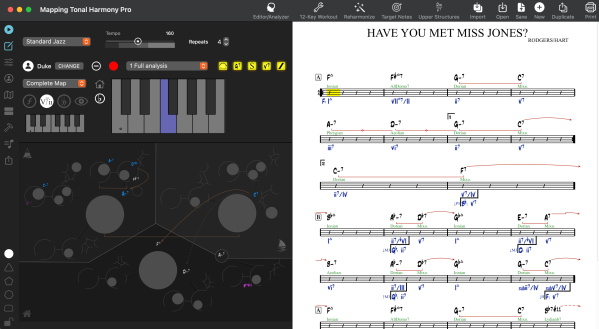
Mapping Tonal Harmony Pro 5.0 (for iPad, Mac, Win & Andoird)
What’s new
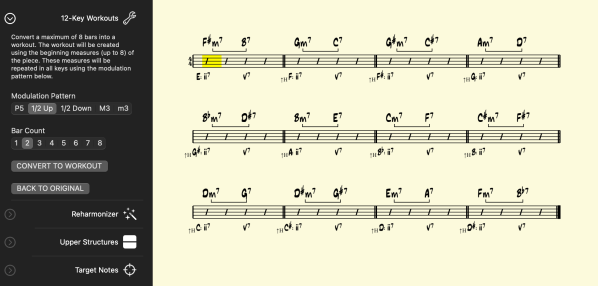
MIDI Export
Print Worksheets
Harmonic Rhtyhm
Audio Markers
Circle of Fifths
and much more…
Read more at mDecks.com
29 Friday Mar 2013
Posted in Uncategorized
Mapping Tonal Harmony Pro 5.0 (for iPad, Mac, Win & Andoird)
What’s new
MIDI Export
Print Worksheets
Harmonic Rhtyhm
Audio Markers
Circle of Fifths
and much more…
Read more at mDecks.com
15 Friday Feb 2013
Posted in ipad app, mac app store, music app, music book, tonal harmony
Tags
ap music theory, best music app, chords, ear training, mac app, mac app store, Mapping Tonal Harmony, music for mac, music theory, tonal harmony
Great News! MTH 4.1 ON YOUR MAC
Mapping Tonal Harmony Pro 4.1 is now available on the Mac App Store
![]()
“Thanks to all the great musicians that helped us create this version.”
To find out more visit:
Mapping Tonal Harmony Pro at mDecks.com
The optional workbooks are now also available
Workbooks
08 Friday Feb 2013
Posted in Uncategorized
Tags
ap music theory, best music app, ipad app, Mapping Tonal Harmony, music app, music app for iPad, music publisher, music theory, tonal harmony
Mapping Tonal Harmony Pro 4.1 is now availbale at the App Store
The Mapping Tonal Harmony Workbooks Vol. 1 thru 7
are also available at mDecks.com
About the Mapping Tonal Harmony Workbooks
The volumes in the Mapping Tonal Harmony collection have been envisioned as auxiliary material in the study of Tonal Harmony. The main objective of these books is to provide the student, teachers, composers and/or songwriters with a tool that will aid them in hearing, analyzing, foreseeing, and composing harmonic progressions without struggle, in all keys alike.
What’s new in version 4.1
. Larger Keyboard for better access to key changes.
. Improved tapping response for map functions.
. New tutorials on how to use the app
. Minor bug fix (previous voicing now shows now in the correct inversion)
What’s new in version 4.0
. Standard classical notation for all functions and inversions
. Inversions: Root, first, second and third inversions are now available in all modes
. Pedal points in all modes
. Five-part Voicings. Choose from a stock of voicings in SSATB configuration
. Standard music notation now shows the current and previous chord-voicing
. Voice-Leading Algorithm with a randomly selected voicing candidate to create valid variations for any progression
. Bass movement detector which identifies bass-lines in real-time
. 3-D Sound Panning: the sound for each function is now panned by using its location on the map.
. One Sound Bank for both Classical and Jazz voicings (now included within the app, no wifi necessary on installation)
. New Sliders which are more responsive and with buttons to change & control tempo and cadence-lines
. Progression paths can now be turned on/off
. Progress-bar reflects the current song playing time in audio mode
. Audio Songs Original Key button allows you to view the map in the song’s original key
. New Progressions using inversions and bass-lines
. Online manual
18 Friday Jan 2013
Posted in ipad app, music app, tonal harmony


What’s new in version 4.0
. Standard classical notation for all functions and inversions
. Inversions: Root, first, second and third inversions are now available in all modes
. Pedal points in all modes
. Five-part Voicings. Choose from a stock of voicings in SSATB configuration
. Standard music notation now shows the current and previous chord-voicing
. Voice-Leading Algorithm with a randomly selected voicing candidate to create valid variations for any progression
. Bass movement detector which identifies basslines in realtime
. 3-D Sound Panning: the sound for each function is now panned by using its location on the map.
. One Sound Bank for both Classical and Jazz voicings (now included within the app, no wifi necessary on installation)
. New Sliders which are more responsive and with buttons to change & control tempo and cadence-lines
. Progression paths can now be turned on/off
. Progress-bar reflects the current song playing time in audio mode
. Audio Songs Original Key button allows you to view the map in the song’s original key
. New Progressions using inversions and basslines
. Online manual
18 Friday Jan 2013
Posted in Uncategorized
Tags
ear training, functional harmony, harmonic progression, ipad app, music app, music lesson, music theory, music tutorial, tonal harmony
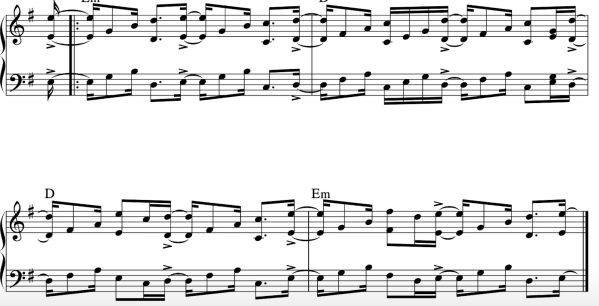
An example of harmonic analysis of Beethoven’s Moonlight Sonata and Mozart’s Symphony No. 40 using Mapping Tonal Harmony Pro 4.0
19 Monday Nov 2012
Posted in Uncategorized
Using Mapping Tonal Harmony to create the harmonic progression
12 Friday Oct 2012
Posted in Uncategorized
Mapping Tonal Harmony Pro for iPad is now available at the App Store
The Mapping Tonal Harmony app is an incredible tool for songwriters, composers, students and teachers. From Jazz & Classical to Pop, Rock & New Age music, this app will take your writing and understanding of tonal music to the next level.
The volumes in the Mapping Tonal Harmony collection have been envisioned as auxiliary material in the study of Tonal Harmony. The main objective of these books is to provide the student, teachers, composers and/or songwriters with a tool that will aid them in hearing, analyzing, foreseeing and composing harmonic progressions without struggle, in all keys alike.
17 Saturday Mar 2012
Posted in Uncategorized
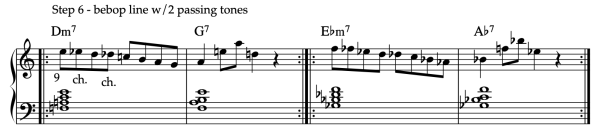
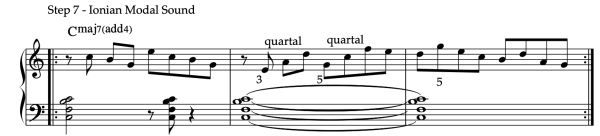
A reharm of Darn that Dream using Upper Structure Quartals
Learn more about using USQs at mDecks.com
09 Monday Jan 2012
Posted in circle of fifths, music book, Online Software
mCircle is a free online javascript that find all the occurrences of a substructure candidate contained in a main Structure.
What is a sturcutre?
Any group of two or more notes is a structure.
Example of commonly used structures: the Ionian scale is a structure. the Pentatonic scale, an augmented triad, etc.
mCricle graphs the structures over the Circle of Fifths, using notes as nodes and lines joining the nodes in order.
Here’s a example of the Ionian scale. Each scale is the associated with a vector, in this case V(1,1,1,1,1,1,6)n2
n2 is the node that gives the name to the structure. (C in the example)
In this guide will find all minor triads contained in the Dorian scale.
Main structure: Dorian Scale.
Substructure candidate: Minor Triad.
Here’s a clip showing how to input these two structure and find all minor triads contained in the Dorian scale.
The result is I, V and II.
In the Dorian scale the only minor triads are in degrees I, V and II
For example in D Dorian the minor triads are Dm, Am and Em.
Any other minor triads is not contained in D Dorian (another way of interpreting this result is: all other triads have notes outside the D Dorian scale)
Applying these results in your playing or writing.
1)One common application of these results is the construction of voicings (either for playing or writing) using upper structure triads. In this example:
Use the Em or Am triad as an upper structure triad of the Dm7 in a chord (when Dm is functioning as a IIm7)
2)If you are improvising over Dm7 you can think of the Em or Am triad as source for notes to choose from.
You can access mCircle at http://mdecks.com/graphs/mcircle.php
source: mDecks.com
29 Thursday Dec 2011
Posted in circle of fifths, music book
This is an introduction to the free online software (javascript app) from mDecks: mCircle located at http://www.mdecks.com/graphs/mcircle.php
mCircle was created by Ariel J Ramos using his Decoding the Circle of Vths (fifths) method to analyze and study musical structures and subsets using a graphical approach.
In this introduction we will use mCircle to find the answer to a basic question (which could then be extrapolated into a more complex one)
Q. How many Major Triads are there in the Major Scale and in which degrees of the scale are they found?
The answer should be obvious to any beginner-intermediate theory student:
A. 3 major triads –> I, IV and V
Now let’s use mCircle to find the answer.
1. Launch mCircle. The layout has 4 main areas.
The Main Structure.
The sub-structure Candidate.
The sub-structures found contained in the main structure.
A list of the main-structure’s degrees where the sub-structures were found
2. In the main structure section choose Ionian from the popup labeled V1 by Name
3. In the sub-Structure Candidate section choose Major Triad from the popup labeled V2 by Name
And there’s your result: I, IV and V.
Now here’s a new question which I leave to the reader:
How many Minor Seventh Chords are there in a Dorian scale and where are they?
source mDecks.com